
Selectrocide for beverage processing
Protect Beverage Quality with a Residue‑Free Sanitation Program.
Remove biofilm from tanks, lines and heat exchangers, control Lactobacillus, Pediococcus and wild yeast, and hold fermentation consistency. No taste or aroma impact at use concentrations.
See the results in the field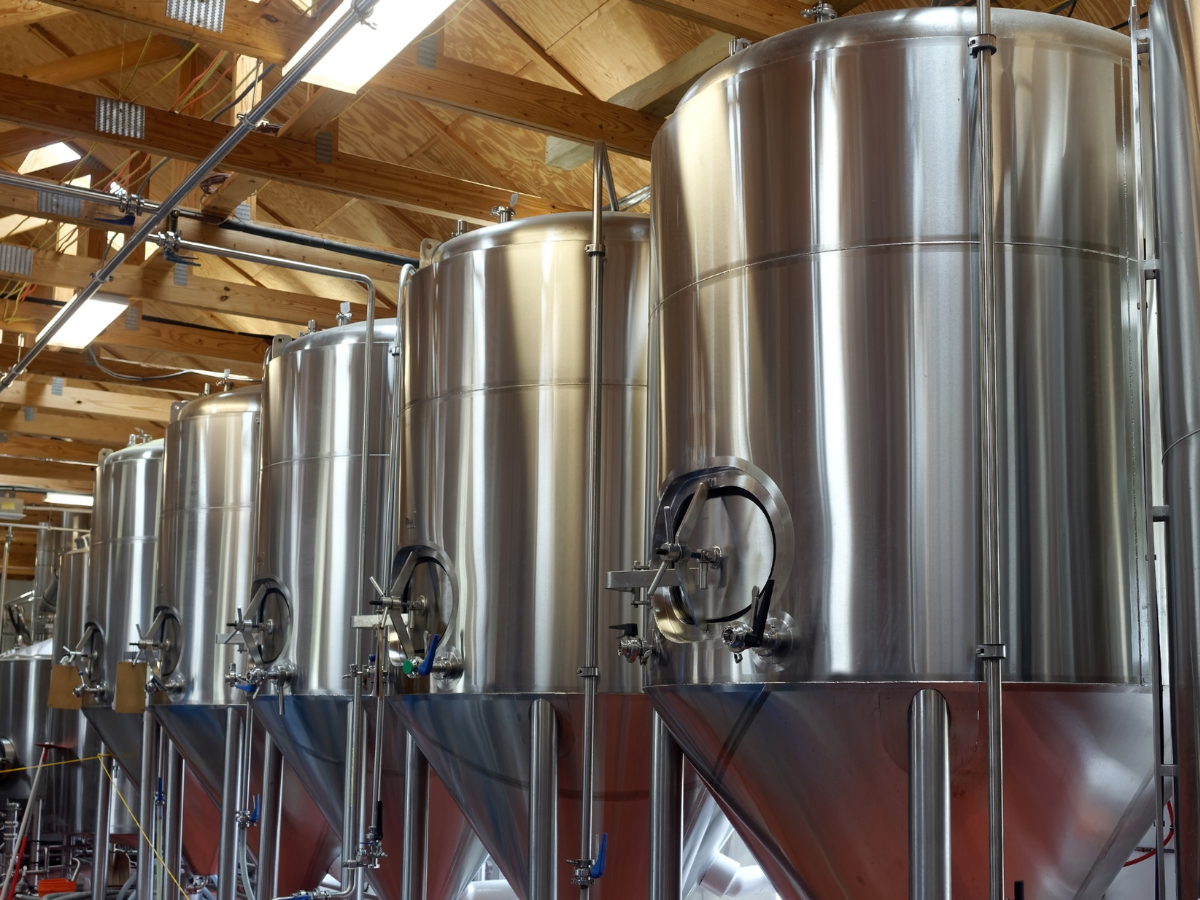
Registered, compliant, and manufactured in the USA
Selectrocide from Selective Micro Technologies
The problem
Why Beverage Processors Switch
Beverage production depends on clean systems, stable water and consistent microbial control. The places that decide all three are the ones a CIP cycle reaches last: the inside of tanks, lines, valves and heat exchangers.
- 01 Biofilm builds up Inside tanks, lines, valves and heat exchangers, where a CIP cycle does not always reach.
- 02 Spoilage organisms hold Lactobacillus, Pediococcus, Acetobacter and wild yeast survive between production runs.
- 03 Flavor drifts Haze, off-flavors and unintended refermentation follow the contamination into the batch.
- 04 CIP costs climb More frequent cycles, more chemical, more downtime, and rinse water you cannot rely on.
- 05 Batches are at risk Recurring microbial positives, batch loss and recall exposure.
What is happening inside the system See more
Slime Shelters Bacteria
The slime on the inside of a water line is biofilm, a living layer bonded to the pipe. It shelters spoilage organisms from ordinary sanitizers, survives a routine CIP cycle, and keeps reseeding everything that passes through. Fermentation tanks, bright tanks, transfer lines, plate chillers and heat exchangers are where it holds on longest, which is why a program that only cleans what you can reach keeps failing in the same places.
Why Bleach Falls Short
Chlorine loses strength as pH climbs. Above about 7.5 it converts to hypochlorite ion and gives up most of its killing power. Bleach is also consumed by organic load before it reaches the biofilm, so repeated shock chlorination costs more every time and is hard on gaskets, seals, fittings, pumps and the stainless it runs through.
Flavor Is the First Casualty
Long before a positive shows up on a plate, contamination shows up in the glass: haze, souring, off-aromas and refermentation that was never in the recipe.
A Route for Reinfection
You can clean the floors, the exterior and the fittings and still put spoilage organisms back into the batch from the inside of a transfer line, a valve or a heat exchanger. Until the internal surfaces are clean, the system keeps handing the problem back to the product.
How it works
Into the loop. Through the tank.
Make chlorine dioxide on site and inject it into the CIP loop. It climbs to the spray ball, washes every internal surface, drains through the cone and recirculates until the system is clean.
Example of a CIP loop. Selectrocide is generated in a tote, drawn into the supply line by an injector, carried up to the spray ball inside a fermentation tank, washed down the internal surfaces, collected in the cone and returned by the riser to circulate again.
Make it on site
Drop the pouch into a tote of water and generate Ultra-Pure chlorine dioxide.
Connect the injector
Run the tote into a proportional injector on the CIP supply line, including Dosatron style units.
Set your treatment rate
Set the injector for the concentration you need.
Recirculate
Treated solution loops through the tank until the internal surfaces are clean, then drains.
No generators, no chemical mixing, no complicated equipment.
Where it works
One Solution Across Your Entire Operation
CIP and process systems
CIP and Closed Systems
Uses
Fermentation tanks, bright tanks and process piping.
Results
Removes biofilm inside closed systems.
Also transfer lines, heat exchangers, plate chillers, fillers, valves and pumps. Reaches the internal surfaces where traditional chemistries fail, and reduces how often you have to run a CIP cycle at all.
COP and Equipment Cleaning
Uses
Disassembled parts, gaskets and fittings.
Results
Thorough sanitation without residue.
Keg washers, bottling and packaging equipment. Compatible with sensitive materials, and consistent sanitation between production runs.
Drains and High-Risk Areas
Uses
Floor drains, trench drains and high-moisture zones.
Results
Fewer microbial harborage points.
The wet zones throughout the facility that seed everything else. Improves facility hygiene and environmental control between runs.
Water, brewery and winery systems
Water and Ingredient Systems
Uses
Ingredient and blending water, rinse water.
Results
Microbiologically stable water.
Cooling and storage tanks included. Reduces biofilm formation in distribution systems and improves overall sanitation consistency.
Brewery Systems
Uses
Fermentation vessels, bright tanks, transfer lines.
Results
Fewer souring organisms.
CO₂ lines, plate chillers and keg systems. Helps prevent haze and unintended refermentation, protects hop profile and fermentation character, and supports consistent batch performance.
Winery Systems
Uses
Crush pad equipment, fermentation and storage tanks.
Results
Controls acetic acid bacteria and spoilage organisms.
Transfer systems, barrel rinse water and bottling lines. Helps maintain acid balance and flavor profile, protects varietal expression, and supports cleaner cellar environments.
Field results
Proven Results in the Field
Real-world outcomes from operations using Selectrocide as part of their sanitation program.
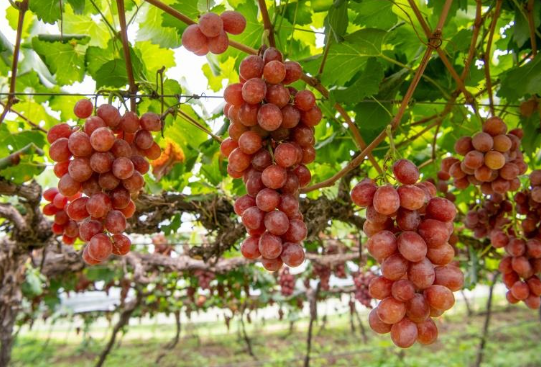
73 ACRES
Vineyard trial
NO MOLD
Across 1,500 km shipment
Protect Grape Quality from Field to Shelf.
Ultra-Pure ClO₂ was used across a 73-acre South African vineyard for foliar treatment, irrigation dosing and post-harvest sanitation. Product integrity was maintained across a 1,500 km refrigerated shipment with no mold or mildew development observed. Conventional chemical use was significantly reduced across the operation.
Read the study →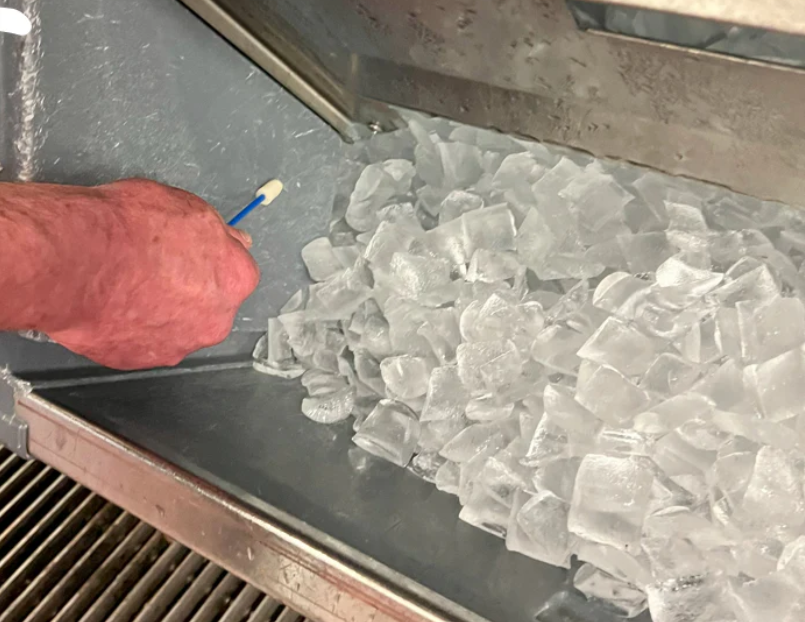
19.2M → 50
CFUs in the ice machines
NOT DETECTED
E. coli and Legionella
Eliminate Ice Machine Contamination. Without Extra Labor.
Ultra-Pure ClO₂ gas reduced contamination inside a major Orlando resort’s ice machines from 19.2 million CFUs to 50. No additional cleaning was required after installation, and E. coli and Legionella were not detected in any post-treatment sample.
Read the study →Safety and compliance
Safety for Beverage Processors
Get started
Get Started with Selectrocide®
A complete Ultra-Pure ClO₂ system to treat water, sanitize tanks and lines, and control biofilm across your facility.
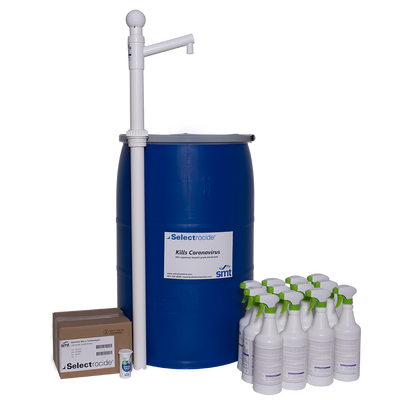
Selectrocide® 12G Kit →
Includes Selectrocide® 12G pouches, generation container, dispensing equipment, and test strips. Everything needed to treat water and sanitize equipment. Each pouch treats 3,000 gallons at 1 ppm.
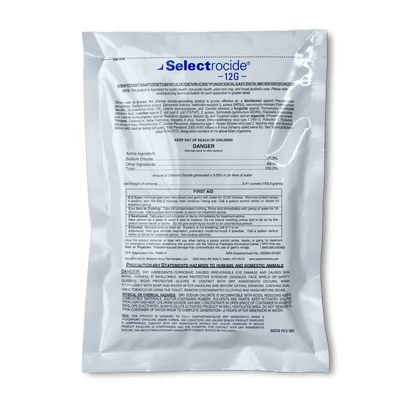
Selectrocide® 12G Pouch →
Start small. Drop in, generate, and go. No mixing, no measuring. Built for waterlines, shock treatments, and tank sanitation. Treats up to 3,000 gallons at 1 ppm.
Get started
Protect Flavor. Reduce Risk.
In beverage processing, sanitation decides flavor, shelf life and brand reputation. We can help build a program that protects your process and your product.