
Selectrocide for poultry drinking water
Improve Water. Reduce Losses. Strengthen the Flock.
Remove biofilm from waterlines, nipple drinkers and header tanks, reduce Salmonella and pathogen pressure, and improve flock performance, weight gain and feed conversion.
See how it works in the field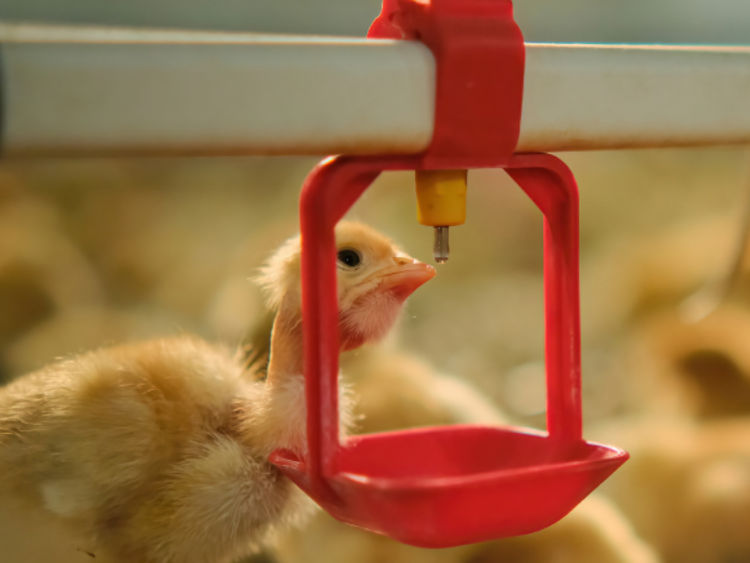
Registered, compliant, and manufactured in the USA
Selectrocide from Selective Micro Technologies
The problem
The Cost of Dirty Water on a Poultry Farm
Water is the largest single input a bird takes in every day. The slime you find in a dirty drinking water line is biofilm, and it turns the line, the header tank and the nipple drinker into a working reservoir that costs you intake, gain and livability long before anything looks wrong.
- 01 Biofilm builds up The slime in the waterline is biofilm, and it keeps reseeding the water passing through to every nipple drinker in the house.
- 02 Birds drink less Off-flavor, odor and visible fouling suppress water intake across the flock.
- 03 They eat less Water drives feed intake, so feed conversion slips right along with it.
- 04 Gain and uniformity drop Weight gain, flock uniformity and performance all track drinking water.
- 05 More illness and treatment Wet litter, cross-flock contamination and early chick mortality, then more labor, more antibiotics and labor intensive protocols between flock turns.
What is happening in the line See more
Slime Shelters Bacteria
The slime on the inside of a water line is biofilm, a living layer bonded to the pipe. It shelters bacteria from ordinary sanitizers, restricts flow, plugs nipple drinkers and regulators, and keeps reseeding the water passing through. Iron and manganese, mineral and lime scale buildup, organic matter and the algae behind green water in an open header tank all build up alongside it and make the problem worse.
Why Bleach Falls Short
Chlorine loses strength as pH climbs. Above about 7.5 it converts to hypochlorite ion and gives up most of its killing power, and most farm water sits right in that range. Bleach, acids and peroxides are also consumed by organic load before they reach the biofilm, so repeated shock chlorination costs more every time and is hard on nipple drinkers, header tanks, fittings and lines. The result is poor water quality holding back intake and performance, plus labor inefficiency and overcomplicated chemical programs.
Birds Drink Less
Off-flavors, odor and visible fouling suppress water intake. Birds and chicks that drink less eat less, and feed conversion, weight gain and flock performance follow the water.
A Route for Reinfection
You can wash down the house, the equipment rooms and the entryways between turns and still put pathogens like Salmonella and E. coli back through the water line. Until the line itself is clean, the drinking water keeps handing the problem back to the next flock.
How it works
From the tote to the drinker.
See how the system works from start to finish: make chlorine dioxide in the tote, pull it into the water line with a proportional injector, and send treated water through the lines to every drinker.
Poultry water treatment system showing chlorine dioxide generated in a tote, drawn into the incoming water line by a proportional injector, and carried through the water lines to the nipple drinkers.
Make it on site
Drop the pouch into a tote of water. It generates Ultra-Pure chlorine dioxide right there on the farm.
Connect the injector
Run the tote into a proportional injector on your water line, including Dosatron style units.
Set your treatment rate
Set the injector for the concentration you need.
Treat every drinker
Treated water moves through your existing lines all the way to the last nipple drinker in the house.
No generators, no bulk chemical mixing, no complicated equipment.
The solution
Where Selectrocide® Works on a Poultry Farm
Drinking Water Systems
Ultra-Pure chlorine dioxide generated on site in a sealed micro-reactor. Continuous low ppm dosing and shock treatment for waterlines, nipple drinkers, header tanks, open reservoirs and storage systems.
- Destroys bacteria and pathogens in the water system
- Removes and prevents biofilm and slime
- Oxidizes iron and manganese buildup
- Improved water intake, feed conversion and weight gain
- Reduced mortality and stronger early chick starts
- Cleaner waterlines and improved water taste and odor
- Controls algae and organic load, maintaining waterline flow rates
Barn, Coop and House Sanitation
Broiler grow-out barns, layer houses, turkey barns, brooder chambers, equipment rooms and entryways.
Lower cross-flock contamination, reduced pathogen pressure at placement, cleaner biosecurity between production cycles.
Egg Handling, Hatcheries and Incubators
Egg handling areas, hatchers, trays, chick boxes and transport systems.
Improved hatchability, lower early chick mortality, reduced cross-contamination, cleaner eggs and equipment surfaces.
Proven in the field
Proven Results in the Field
Real-world outcomes from farms using Selectrocide as part of their water treatment protocol.
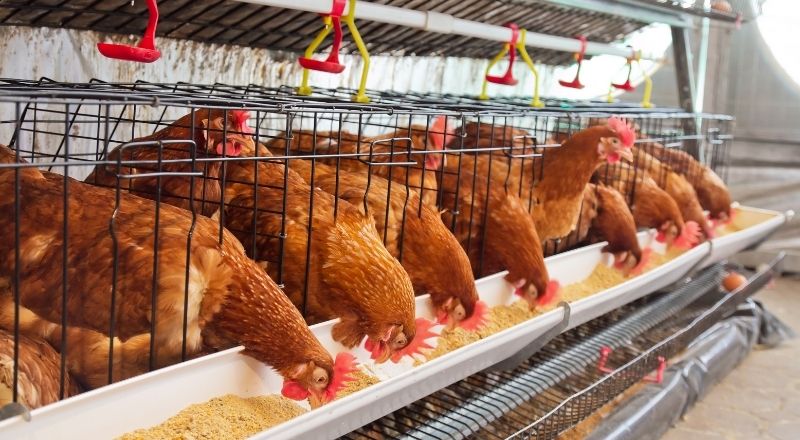
+11.7%
Increase in livability
5.7%
Improvement in feed conversion
Cleaner Water. Healthier Flocks.
Reduce microbial load and improve water quality by breaking down biofilm where standard treatments fall short. Selectrocide penetrates and controls buildup at the source, helping protect bird health, support performance, and stabilize your water system.
Read the study →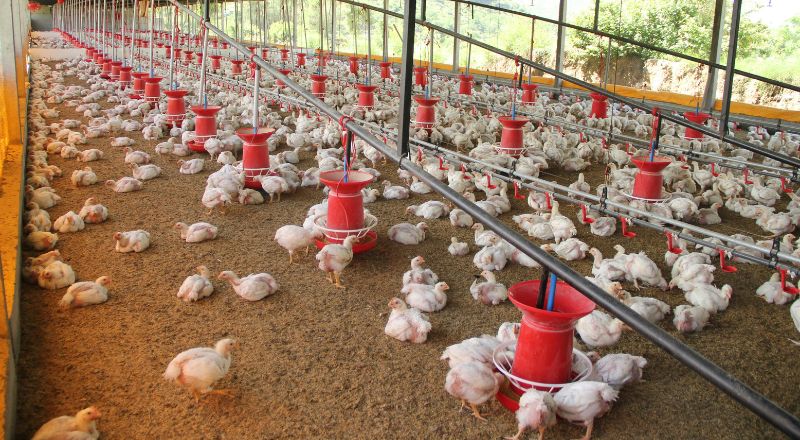
+0.9 lb
Per bird
$35K
Added revenue
Restoring Poultry Water Quality at the Source
Restore water quality and improve flock performance by removing biofilm and controlling microbial contamination at the source. Selectrocide combines shock treatment and continuous dosing to clean waterlines, eliminate coliforms, and maintain consistent, low-bacteria water.
Read the study →Dosing
Water Treatment for Poultry Farms
Dosing varies based on water source, organic load, system type, and existing biofilm.
< 1 ppm
Municipal water
Continuous dosing rate for municipal water sources.
1–2 ppm
Well water systems
Higher organic load in well water may require up to 2 ppm.
< 0.8 ppm
Residual before consumption
Residual chlorine dioxide should remain below 0.8 ppm prior to animal consumption.
20–50 ppm
Initial shock treatment
Used to flush and clean the system before transitioning to maintenance.
Waterline Dosing and Treatment Guide
- Test at the nipple drinker, not only at the dosing point.
- Adjust the program to the actual water source and system.
- Always confirm the rate for your application on the product label.
Exact dosing varies by water source, organic load, and system type. Water testing is recommended before establishing a final protocol.
Safety and compliance
Farm Safety
Get started
Get Started with Selectrocide®
A complete Ultra-Pure ClO₂ system to treat water, sanitize equipment, and control biofilm across your farm.
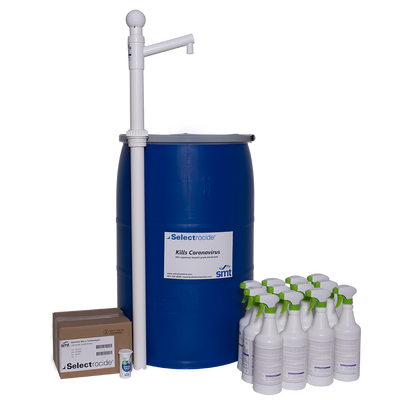
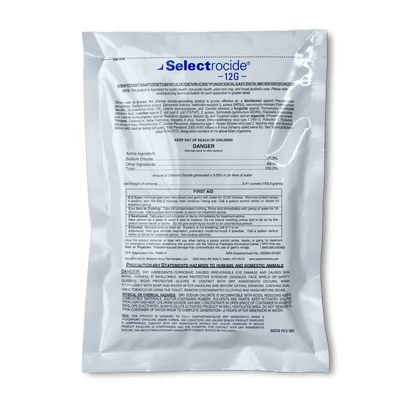
Selectrocide® 12G Kit →
Includes Selectrocide 12G pouches, generation container, dispensing equipment, and test strips. Everything needed to treat water and sanitize equipment. Each pouch treats 3,000 gallons at 1 ppm.
Selectrocide® 5G Pouch →
Start small. Drop in, generate, and go. No mixing, no measuring. Built for waterlines, shock treatments, and barn sanitation. Treats up to 1,280 gallons at 1 ppm.
Get started
Healthier Flocks Start with Cleaner Water.
Across many farms, improved water quality has been directly tied to lower mortality rates, cleaner systems, and measurable cost savings. We can help build a practical, field-tested water treatment protocol specific to your operation.