
Selectrocide for livestock drinking water
Livestock Drinking Water Treatment
Remove biofilm from water lines, stop the slime and algae, and protect intake and performance across poultry, dairy, cattle and swine.
See how it works in the field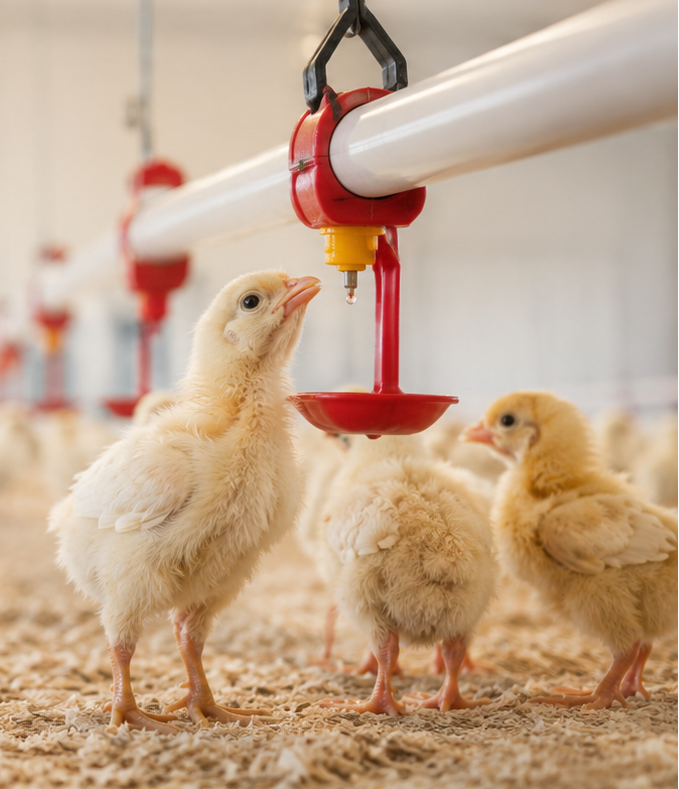
Registered, compliant, and manufactured in the USA
Selectrocide from Selective Micro Technologies
The problem
The Cost of Dirty Water Lines
Water is the largest single input your animals take in every day. The slime you find in a dirty drinking water line is biofilm, and it turns the line into a working reservoir that quietly works its way through the whole operation long before anything looks wrong.
- 01 Slime builds up The slime in the drinking water line is biofilm, and it keeps reseeding the water passing through.
- 02 Animals drink less Off-flavor, odor and visible fouling suppress water intake.
- 03 They eat less Water drives feed intake, so feed conversion slips with it.
- 04 Production drops Milk, eggs and average daily gain all track water.
- 05 More illness and treatment Loose manure, wet litter and soiled bedding, then more labor, more antibiotics and more culls.
What is happening in the line See more
Slime Shelters Bacteria
The slime on the inside of a water line is biofilm, a living layer bonded to the pipe. It shelters bacteria from ordinary sanitizers, restricts flow, plugs nipples and drinkers, and keeps reseeding the water passing through. Mineral buildup, lime scale, organic matter and the algae behind green water all build up alongside it and make the problem worse.
Animals Drink Less
Off-flavors, odor and visible fouling suppress water intake. Animals that drink less eat less, and feed conversion, gain and production follow the water.
A Route for Reinfection
You can clean the barn and still put pathogens like Salmonella and E. coli back through the water line. Until the line itself is clean, the drinking water keeps handing the problem back to the herd or flock.
The chemistry
The Problem With Chlorine
How it works
From the tote to the trough.
See how the system works from start to finish: make chlorine dioxide in the tote, pull it into the water line with a proportional injector, and send treated water through the lines to every drinker.
Livestock water treatment system showing chlorine dioxide generated in a tote, drawn into the incoming water line by a proportional injector, and carried through the water lines to the drinkers.
Make it on site
Drop the pouch into a tote of water. It generates Ultra-Pure chlorine dioxide right there on the farm.
Connect the injector
Run the tote into a proportional injector on your water line, including Dosatron style units.
Set your treatment rate
Set the injector for the concentration you need.
Treat every drinker
Treated water moves through your existing lines all the way to the last drinker in the barn.
No generators, no bulk chemical mixing, no complicated equipment.
Proven in the field
Proven Results on Working Farms
Farms running Selectrocide continuously see it in drinking water intake, healthier animals and lower antibiotic use, better water connection, higher water intake and lower mortality.
80% → 14%
Positive samples
72%
Fewer mastitis cases
Reducing Pathogenic Biofilms
Ultra-Pure chlorine dioxide in the drinking water line cut Prototheca positive samples from 80 percent to 14 percent and reduced mastitis cases by 72 percent.
Read the study →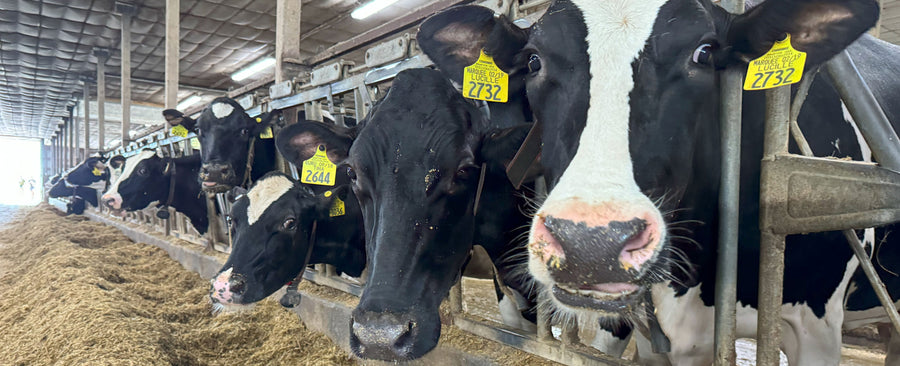
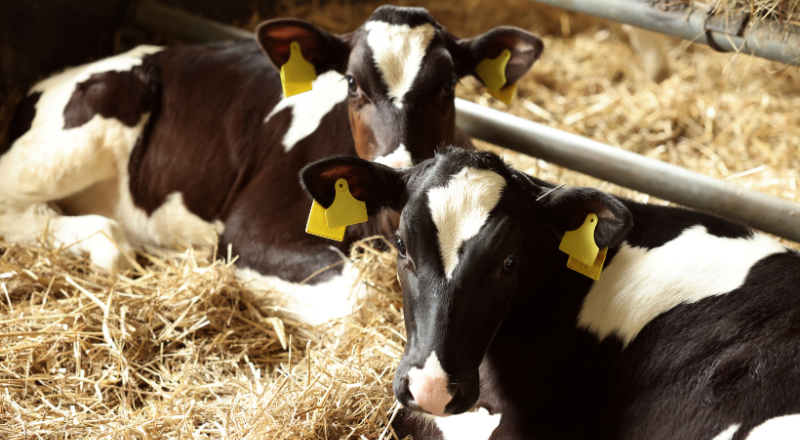
+21.2%
Milk production
30% → 0%
Calf scours
Rosedale Colony Dairy
Selectrocide injected continuously into the drinking water line raised daily milk production by 21.2 percent, took calf scours from about 30 percent to none, and shrank digital dermatitis lesions in the herd.
Read the study →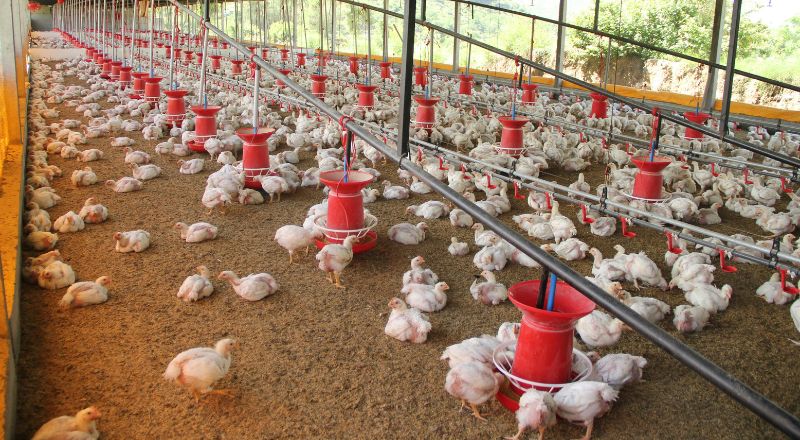
+0.90 lb
Gain per bird
0 CFU/mL
Coliform bacteria
NC Broiler Farm
Treating the drinking water added 0.90 lb of gain per bird and brought coliform bacteria in the water line down to zero CFU per mL.
Read the study →Dosing
Livestock Water Treatment Dosing Guide
Selectrocide cleans the water, strips biofilm already built up in the lines, and keeps new build-up from taking hold.
< 1 ppm
Municipal water
Continuous dosing rate for municipal water sources.
1–2 ppm
Well water systems
Higher organic load in well water may require up to 2 ppm.
< 0.8 ppm
Residual before consumption
Residual chlorine dioxide should remain below 0.8 ppm before animals drink.
20–50 ppm
Initial shock treatment
Used to flush and clean the system before transitioning to maintenance.
Waterline Dosing and Treatment Guide
- Test at the drinker, not only at the dosing point.
- Adjust the program to the actual water source and system.
- Always confirm the rate for your application on the product label.
Exact dosing varies by water source, organic load, and system type. Water testing is recommended before establishing a final protocol.
By operation
Built for Every Livestock Water System
Poultry
Waterline and hatchery programs for broilers, layers and turkeys.
Poultry water →Dairy
Drinking water for the milking herd, dry cows, heifers and calves.
Dairy water →Cattle
Drinking water, tanks and troughs for beef herds, feedlots and cow-calf.
Cattle water →Swine
Barn water systems and surfaces from farrowing through nursery and finishing.
Swine water →Get started
Get Started with Selectrocide
A complete system to treat your drinking water.
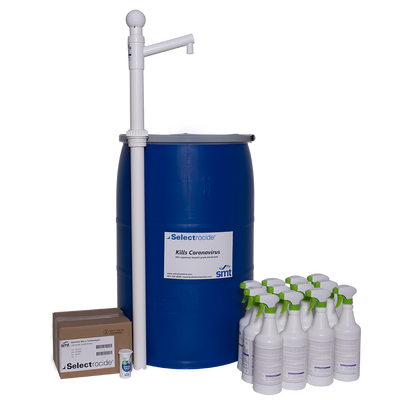
Selectrocide 12G Kit →
Everything you need to start: pouches, generation container, dispensing equipment, and test strips. Each pouch treats 6,000 gallons at 0.5 ppm.
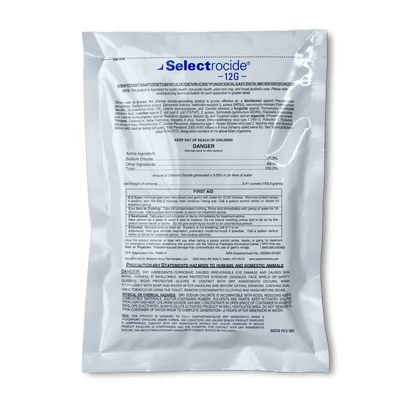
Selectrocide 12G Refill Pouch →
Just the pouches, same 12G formula and yield. No need to reorder the container or hardware each time, reducing plastic waste with every refill.
Next step
Get a Custom Water Protocol
Improved water quality has been tied to lower mortality rates, cleaner systems, and measurable cost savings. Tell us your species, your water source, and what you are seeing in the lines. In-person consultations available.