
Selectrocide for horticulture
Clean Water Lines. Clear Emitters. Consistent Crops.
Remove algae, slime and biofilm from greenhouse and nursery irrigation systems, then keep it from coming back with a low continuous dose that is easy on lines, emitters and equipment.
See the greenhouse line results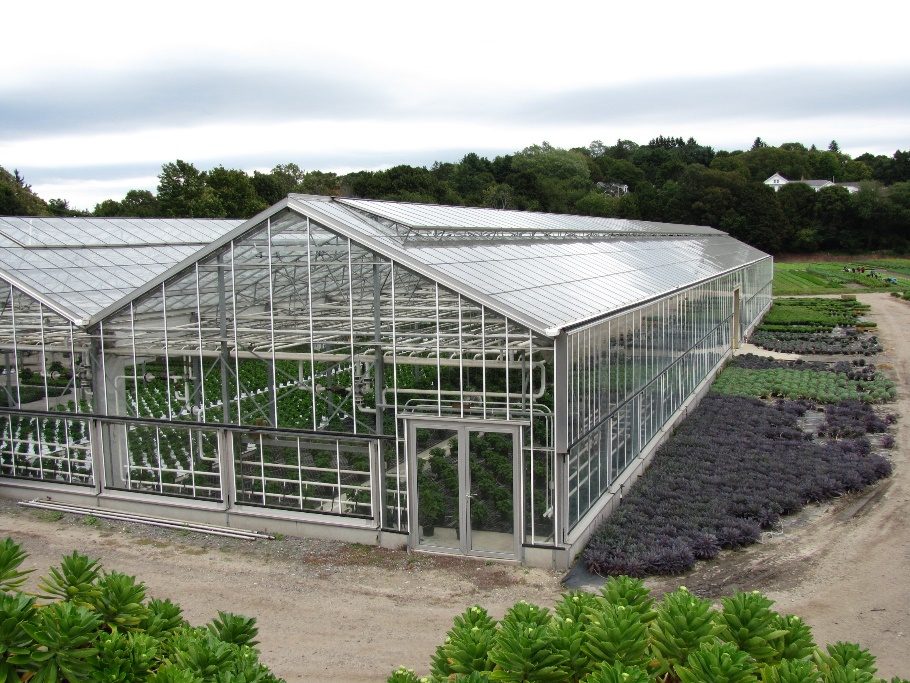
Registered, compliant, and manufactured in the USA
Selectrocide from Selective Micro Technologies
The problem
What Builds Up in a Greenhouse Water System
Greenhouses and nurseries run on recycled and recirculating water. Irrigation lines, drip emitters, misting systems, flood floors and pond or canal source water all grow algae, slime and biofilm, and it rarely shows until an emitter clogs or a crop starts to struggle.
- 01 Biofilm builds up Slime coats the inside of irrigation lines, drip tubes and nozzles in every low-flow run.
- 02 Algae takes hold Recycled, pond and canal water carry algae and organic load into tanks, benches and flood floors.
- 03 Pathogens ride the water Whatever is in the water moves to every bench and block that shares the same source.
- 04 Emitters clog Buildup narrows emitters and drip lines, so watering goes uneven across the bench.
- 05 Crops and labor suffer Uneven crops, more shrink, and emergency flushes and cleanouts nobody scheduled.
What is happening in the line See more
Slime Shelters Pathogens
The slime inside an irrigation line is biofilm, a living layer bonded to the pipe wall. It shelters bacteria and fungi from ordinary treatments, narrows emitter openings, consumes nutrients from the feed water and keeps reseeding the water passing through. It is the most common reason a cleaned irrigation system fouls again.
Recycled Water Spreads It
Recycling irrigation water saves volume, but it also recirculates whatever is already in it. Contamination at the source compounds across every bench, block and crop on the same system.
Uneven Water, Uneven Crops
Partly clogged emitters deliver less water than the ones beside them. The result is inconsistent growth inside the same block, which complicates scheduling and grading at sale.
Cleaning Without a Program
Flushing knocks back the visible slime but leaves the anchored layer, so growth returns within days. A shock cleanout followed by a low continuous dose holds control instead of chasing it.
How it works
From the source to the emitter.
Make chlorine dioxide in a tote, pull it into the irrigation line with a proportional injector, and send treated water through every line, drip tube and emitter on the bench.
Source water, injector, irrigation lines and drip emitters treated with Selectrocide chlorine dioxide.
Make it on site
Drop the pouch into a tote of water. It generates Ultra-Pure chlorine dioxide right there in the greenhouse.
Shock the lines
Run 50 to 100 ppm through tanks, lines and emitters, hold it, then flush. Remove or cover plants first.
Set a continuous dose
Connect the tote to a proportional injector, including Dosatron style units, and set a low maintenance rate.
Keep every emitter clean
Treated water moves through your existing lines, so slime and algae stay out of the drip tubes and nozzles.
No generators, no bulk chemical mixing, no complicated equipment.
The solution
Where Selectrocide® Works in a Growing Operation
Irrigation and water systems
Irrigation Lines and Drip Tubes
Uses
Irrigation lines, transfer lines, header lines and drip tubes.
Results
Biofilm and slime removed, and water delivered evenly down the line.
A 50 to 100 ppm shock cleanout clears the anchored layer that flushing leaves behind, then a low continuous dose keeps it from re-establishing. Chlorine dioxide penetrates slime layers that stop ordinary sanitizers, so the treatment reaches the pipe wall instead of stopping at the surface.
Emitters, Drippers and Mist Nozzles
Uses
Drip emitters, drippers, mist nozzles and spray heads.
Results
Keeps emitters open for even watering across the bench.
Buildup narrows emitter openings until some plants get less water than the ones beside them, and that shows up as uneven growth inside the same block. Test at the emitters, mist nozzles and drip tubes, not only at the injector, to confirm the dose is reaching the end of the line.
Holding Tanks and Source Water
Uses
Water holding tanks, recycled water, and pond, canal and well source water.
Results
Algae controlled and microbial load reduced before water reaches the lines.
Contamination at the source compounds across every line downstream. Treating the tank and source water first takes the load off the rest of the system. Neutral pH chemistry is easy on tanks, pumps and fittings, and pond or recycled water may need a higher injection rate for its organic load.
Growing systems
Flood Floors, Flooded Benches and Capillary Mats
Uses
Flood floors, ebb and flow benches, capillary mats and recirculating subirrigation.
Results
Slime removed, and algae and bacteria kept from re-establishing.
Recirculating water saves volume, but it also carries whatever is already in it to every bench on the same system. A continuous low dose in the recycled water keeps slime and algae from building back up between cleanouts.
Misting, Humidification and Propagation
Uses
Misting and humidification systems, propagation water and fog lines.
Results
Cleaner mist and propagation water where young plants are most exposed.
Propagation houses run warm and wet, which is exactly where slime and algae grow fastest in fine mist lines. Keeping those lines clean protects the water going onto cuttings and young plants, and keeps nozzles from clogging.
Hydroponic Systems and NFT Channels
Uses
Nutrient loops, NFT channels, gutters and hydroponic gardens.
Results
Less algae to scrub out of channels between crops.
Algae in NFT channels competes with the crop for nutrients in the feed water and can shelter microbes. Treating channels between crops cuts down a labor-heavy cleaning job and slows regrowth for the next cycle.
Surfaces and equipment
Benches, Work Areas and Structures
Uses
Benches, cutting tables, walls, floors, drains, walkways, glazing and evaporative coolers.
Results
EPA registered to disinfect and sanitize hard, non-porous surfaces.
Disinfect at 100 ppm with surfaces kept visibly wet for 10 minutes, before each work period and between crops. Pre-clean first and sweep out plant debris. When spraying with a high-pressure sprayer in an enclosed greenhouse, follow the label for respiratory protection and ventilate afterward.
Tools, Pots, Flats and Buckets
Uses
Cutting tools, pots, flats, flower buckets and planters.
Results
Helps stop disease from moving crop to crop on reused equipment.
Sanitize at 20 ppm for 5 minutes, or soak at 100 ppm for at least 10 minutes to disinfect. Brush or wash used pots and flats first. At the end of the workday, dry and oil cutting tools.
Proven in the field
Proven Results in the Field
Real-world outcomes from growing operations using Selectrocide as part of their water treatment program.
50 ppm
Overnight shock
4 nights
Heavily fouled line
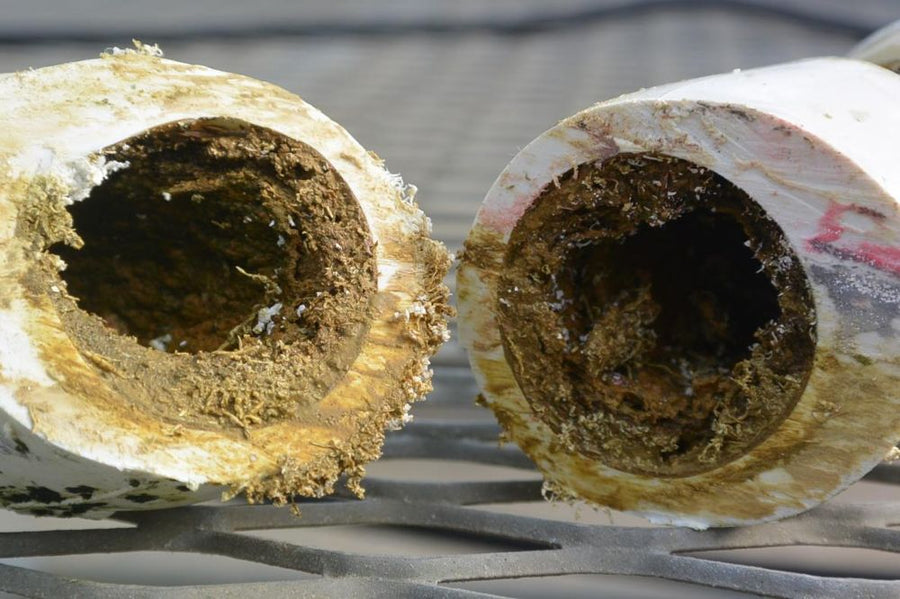
Clearing Algae and Biofilm from Irrigation Lines
Heavily fouled irrigation tubing from a Virginia greenhouse, treated overnight with 50 ppm chlorine dioxide to match the irrigation shock protocol. Most of the thick algae and biofilm buildup was gone after four nights.
Read the study →
0 failures
15+ materials tested
100% compatible
Metals, plastics and elastomers
Tough on Pathogens. Easy on Materials.
No degradation observed across 15+ common system materials, including stainless steel, PVC, EPDM and polyethylene.
Read the study →Dosing
Dosing Your Irrigation System
50–100 ppm
Full cleanout
Tanks, lines and emitters. Hold at least 10 minutes, or overnight for heavy buildup, then flush.
0.25 ppm
Continuous dose
Keeps slime, algae and bacteria from re-establishing in lines and emitters.
0.8 ppm
Heavier organic load
Continuous rate for heavier organic load. Injection up to 3 ppm may be needed to hold it at the emitter.
20–100 ppm
Surfaces and tools
20 ppm for 5 minutes to sanitize. 100 ppm for 10 minutes to disinfect.
Irrigation Dosing and Treatment Guide
- Remove or securely cover plants before a full cleanout.
- Test at the emitters, mist nozzles and drip tubes, not only at the injector.
- Pond and recycled water carry more organic load and may need a higher injection rate.
- Always confirm the rate for your application on the product label.
Exact dosing varies by water source, organic load and system type. Verify concentration with Selective Micro test strips before setting a final program.
Safety and compliance
Safety and Compliance
Get started
Get Started with Selectrocide®
A complete Ultra-Pure ClO₂ system to clean irrigation lines, treat water and sanitize benches and tools.
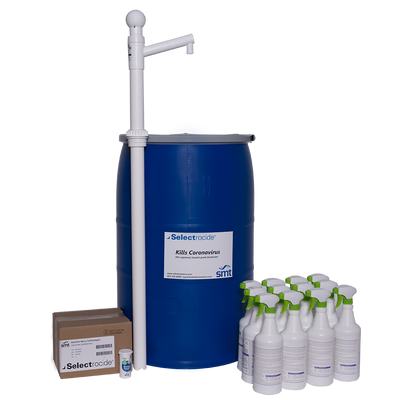
Selectrocide® 12G Kit →
Includes Selectrocide 12G pouches, generation container, dispensing equipment and test strips. Everything needed to clean lines and treat irrigation water. Each pouch treats 6,000 gallons at 0.5 ppm.
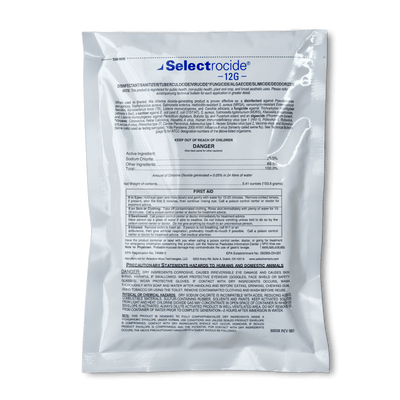
Selectrocide® 12G Pouch →
Drop in, generate, and go. Built for irrigation lines, shock cleanouts and tank sanitation. Treats up to 6,000 gallons at 0.5 ppm.
Get started
Healthy Crops Start with Clean Water Lines.
From propagation houses and greenhouse ranges to container nurseries and hydroponic systems, Selectrocide keeps irrigation water and the lines that carry it clean as part of a long-term water management program, without harsh chemicals or residue.